

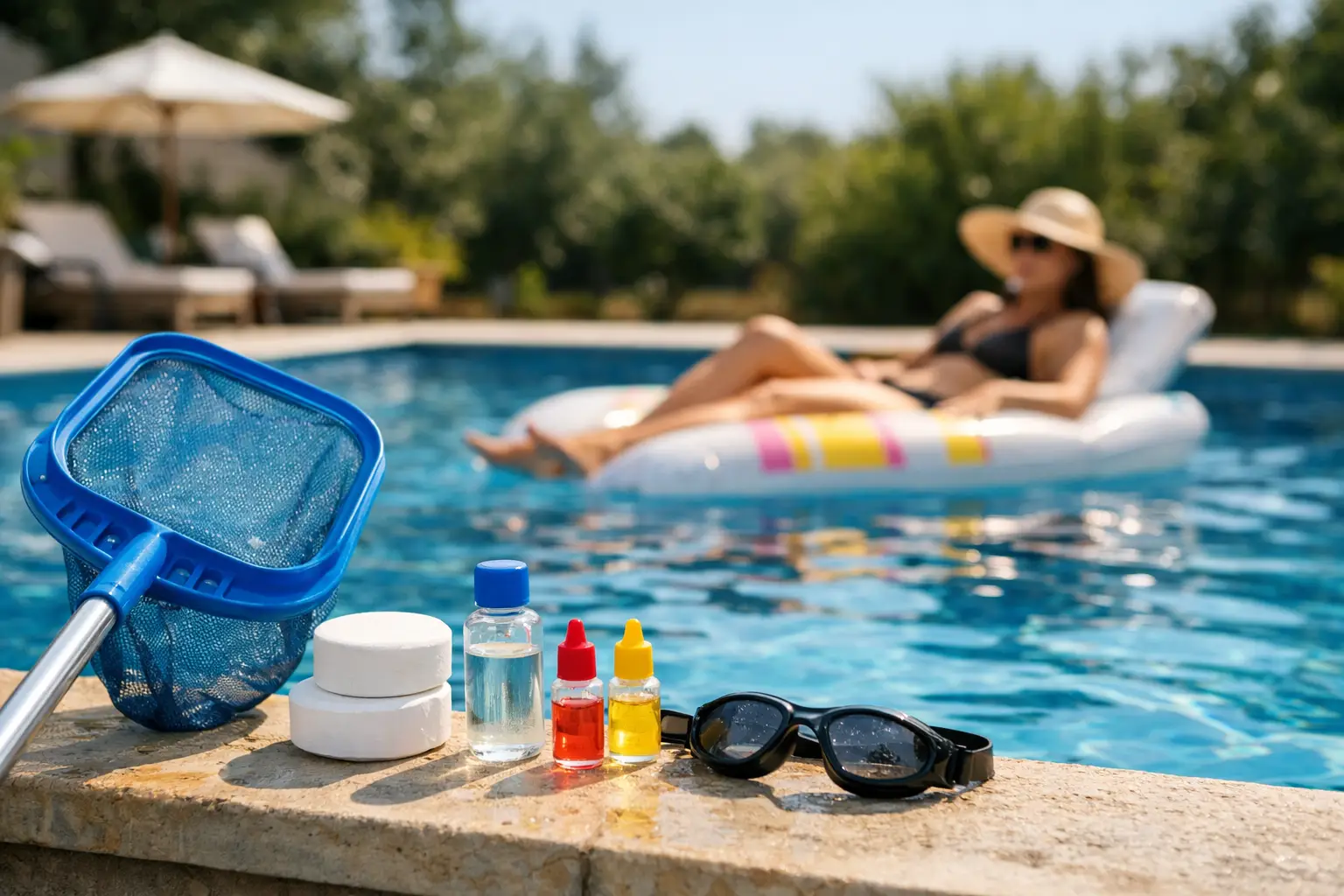
Clear water can turn expensive very quickly. The #1 pool mistake homeowners make every summer – and it costs hundreds to fix – is waiting too long to correct unbalanced water. It often starts with a small change: hotter weather, heavier use, a missed check, or topping up the pool without testing. A week later, the water is cloudy, chlorine is no longer working properly, and the filtration system is under strain.
For many homeowners in the Algarve, especially those with second homes or holiday properties, this is a familiar problem. The pool may look acceptable from a distance, but the chemistry is already moving in the wrong direction. By the time the issue becomes visible, the solution is rarely quick or cheap.
Why this one mistake causes such costly problems
When pool water is out of balance, everything else becomes less effective. Chlorine loses efficiency, algae finds the right conditions to grow, and scale or staining can begin to form on the pool surface and equipment. The longer this goes unchecked, the more aggressive the correction needs to be.
That is where costs rise. Instead of a simple chemical adjustment, homeowners often end up paying for shock treatment, algaecide, flocculant, filter cleaning, replacement sand or glass media, and sometimes repairs to pumps, salt systems, probes, or heat pumps affected by poor water quality. In more serious cases, liners, grout and metal components can also suffer.
This is not just about appearance. Poorly balanced water shortens the working life of the pool itself.
The #1 pool mistake homeowners make every summer – and how to spot it early
The mistake is not only neglect. In many cases, it is assuming that chlorine alone is enough. It is not. A pool depends on balance between pH, alkalinity, sanitiser levels and filtration performance. If one part is off, the rest cannot do its job properly.
Early signs are easy to miss. The water may start to lose its sparkle. Surfaces may feel slightly slippery. You may notice a stronger chlorine smell, which often suggests the opposite of what people think – not too much effective chlorine, but not enough free chlorine working correctly. If swimmers complain of eye irritation, that can also point to chemistry problems rather than over-treatment.
In the Algarve, high temperatures, strong sun, dust, sunscreen, and frequent use all accelerate these changes. Pools in rental properties or homes left unattended for part of the week are especially vulnerable.
How to avoid the problem before it becomes expensive
The most effective approach is simple: test regularly, adjust early, and do not ignore small changes. In summer, pool water should be checked more often than many owners expect. Once a week is a minimum for a private residential pool in normal use. In hotter periods, or when the pool is used daily, more frequent checks are sensible.
Start with pH. If the pH is too high, chlorine becomes less effective. If it is too low, pool components and finishes can be damaged. Alkalinity also matters because it helps keep the pH stable. Then check sanitiser levels and make sure the filtration system is running for long enough each day to match the season and bather load.
It is also worth paying attention to what happens after top-ups. Adding fresh water changes chemistry. So does heavy rain, even in small amounts. If your pool has a salt system, do not assume it is self-managing. Salt pools still require testing and adjustment.
Good maintenance is cheaper than corrective treatment
Homeowners sometimes delay testing or servicing because the pool still looks usable. That delay is where the unnecessary cost begins. Preventive care is almost always more economical than recovery treatment.
A well-maintained pool uses chemicals more efficiently, puts less strain on equipment, and stays ready for use. For property owners, that matters not only for comfort but also for asset value. A pool that is consistently clean, safe and technically sound protects the wider investment in the home.
There is also a practical point many people overlook: repeated emergency corrections are harder on the pool than steady maintenance. Frequent shock treatments and major chemistry swings can create their own wear over time.
When professional support makes sense
Some owners prefer to manage routine checks themselves, and that can work well with the right discipline. But for second homes, rental villas, or larger pools with heating, covers, salt treatment or upgraded filtration, regular professional oversight usually prevents more problems than it costs.
An experienced pool specialist can identify issues before they become visible, check whether equipment is performing correctly, and recommend adjustments based on the specific pool, not a generic chart. That is especially valuable when a pool has older components, recurring algae issues, or unexplained water loss in quality.
With more than 30 years of experience, POOLSHOP ALGARVE supports homeowners across the full pool lifecycle, from construction and renovation to equipment upgrades and ongoing technical support. That joined-up approach matters because water quality, hydraulics and equipment condition are all connected.
The costly summer mistake is rarely one dramatic error. More often, it is a small issue left alone for too long. Catch it early, keep the water balanced, and your pool stays what it should be – a pleasure to use, not an avoidable repair bill. If you need a specialised partner for your pool, contact POOLSHOP ALGARVE on 915 244 816.