

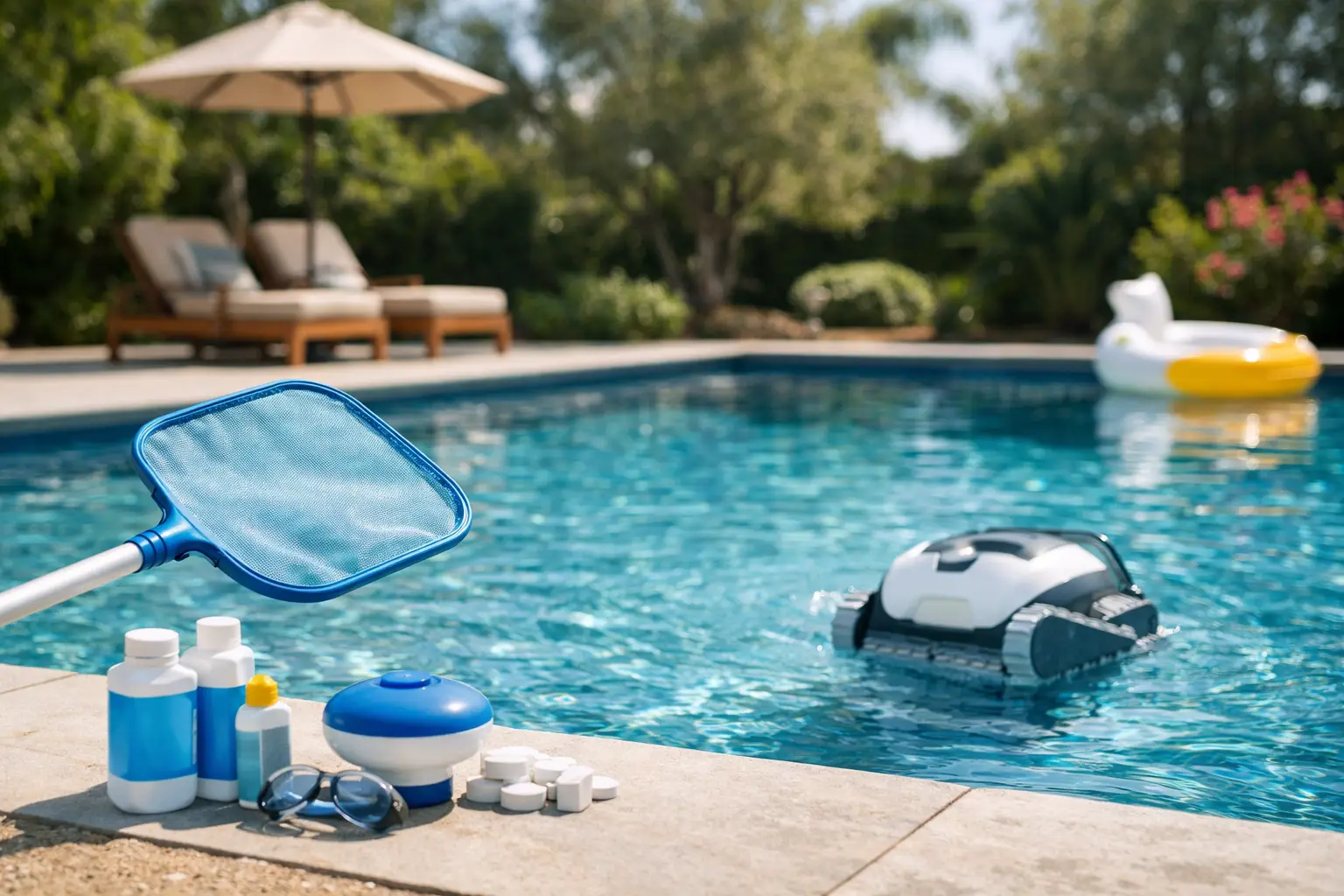
Summer is when your pool gets used the most – and when problems appear the fastest. Higher temperatures, stronger sun, heavier use and more debris can turn clear water cloudy in a matter of days. If you are looking for the best ways to look after your Pool in Summer, the key is consistent care, correct water balance and reliable equipment.
Best ways to look after your Pool in Summer
A pool in the Algarve faces particular pressure during summer. Heat speeds up chlorine loss, evaporation changes water chemistry, and frequent swimming increases the load on the filtration system. Holiday homes and rental properties need even closer attention because several days without checks can quickly lead to algae, staining or equipment strain.
The best approach is not reacting after a problem starts. It is keeping a steady maintenance routine so the pool remains safe, attractive and ready to use every day.
Check water balance more often than you think
In summer, pool water should be tested regularly, ideally several times a week if the pool is in daily use. pH and sanitiser levels are the first things to watch. If the pH drifts too high, chlorine becomes less effective. If it drops too low, surfaces and equipment can suffer.
Balanced water protects more than comfort. It helps preserve liners, tiles, grouting, stainless steel fittings and filtration components. This matters even more in pools that already have some age or have recently been renovated. Small chemical imbalances, repeated over a season, often become expensive repairs later.
Run the filtration system for longer
One of the most common summer mistakes is under-running the filtration system. Warm water encourages algae and bacteria, and a short filtration cycle is rarely enough during hot months. As a general rule, the hotter the weather and the heavier the use, the longer the system should run.
If the water temperature rises significantly, filtration time usually needs to increase with it. This is especially important for family pools, tourist accommodation and properties with regular guest turnover. A well-sized and properly maintained filtration system does most of the hard work, but only if it is given enough operating time.
Keep the pool physically clean
Chemicals alone do not keep a pool in good condition. Leaves, dust, insects and sun creams all add contamination. Skimming the surface, brushing the walls and vacuuming the floor help prevent build-up before it becomes a water quality issue.
In the Algarve, wind and dry conditions can bring fine debris into the water even when the surrounding area looks clean. Skimmers should be emptied frequently, and pump baskets checked as well. When baskets are blocked, circulation suffers, and that affects the whole pool.
Pay attention to filters and circulation
A clean filter is essential in summer. Whether the pool uses sand, cartridge or another system, the filter must be cleaned or backwashed according to use. Poor circulation often shows up first as dull water, dead spots or algae forming in corners and steps.
If you notice weak return flow, air in the system, unusual noise from the pump or persistent cloudiness, it may be a sign that maintenance is overdue or that a component needs inspection. Acting early normally avoids bigger interruptions in the middle of the season.
Protect the water from heat and sun
Strong summer sun affects both water quality and water level. Evaporation can be considerable, and topping up the pool without checking chemistry can gradually upset the balance. At the same time, UV exposure reduces chlorine efficiency, which means sanitiser demand rises.
A good pool cover can help reduce evaporation, limit debris and support heat retention overnight. Not every pool owner uses one in peak summer, but for second homes and less frequently occupied properties, it is often a practical way to reduce maintenance pressure between visits.
Watch for signs of early algae growth
Algae rarely appears without warning. Slippery surfaces, slight green tones, cloudy patches or deposits around steps and corners are often the first signs. These areas usually have weaker circulation and warm up quickly.
Early action is always simpler than recovery treatment. Once algae takes hold, chemical demand increases, filtration works harder and the pool may need to be closed temporarily. For homes used by family and guests, prevention is the better option every time.
Summer pool care also means checking equipment
Looking after a pool is not only about water. Summer is also the season when pumps, filters, lights, heat pumps, salt systems and automatic dosing equipment are under their greatest load. If a system is ageing or not correctly adjusted, hot weather usually exposes the weakness.
This is why regular technical checks are worth it, particularly for larger residential pools, rental properties and homes with upgraded features such as heating, covers or salt treatment. Efficient equipment improves water quality, reduces waste and helps avoid breakdowns at the busiest time of year.
For many property owners in the Algarve, professional support is the most reliable way to keep everything working as it should. POOLSHOP ALGARVE combines over 30 years of experience with supply, maintenance and technical solutions across the full pool lifecycle, which is especially valuable when prevention matters more than emergency repair.
A consistent routine saves time and money
The Best ways to look after your Pool in Summer are not complicated, but they do require consistency. Test the water often, keep the filtration running properly, clean the pool and baskets regularly, protect against heat and sun where possible, and do not ignore early warning signs.
A pool that receives steady attention through summer is easier to manage, cheaper to maintain and far more enjoyable to use. For homeowners, property managers and tourism properties alike, that reliability is what keeps a pool looking its best all season.
For all your pool needs, contact our team of Pool experts today on Tel: 915244816 or email: poolshopalgarve@outlook.pt