

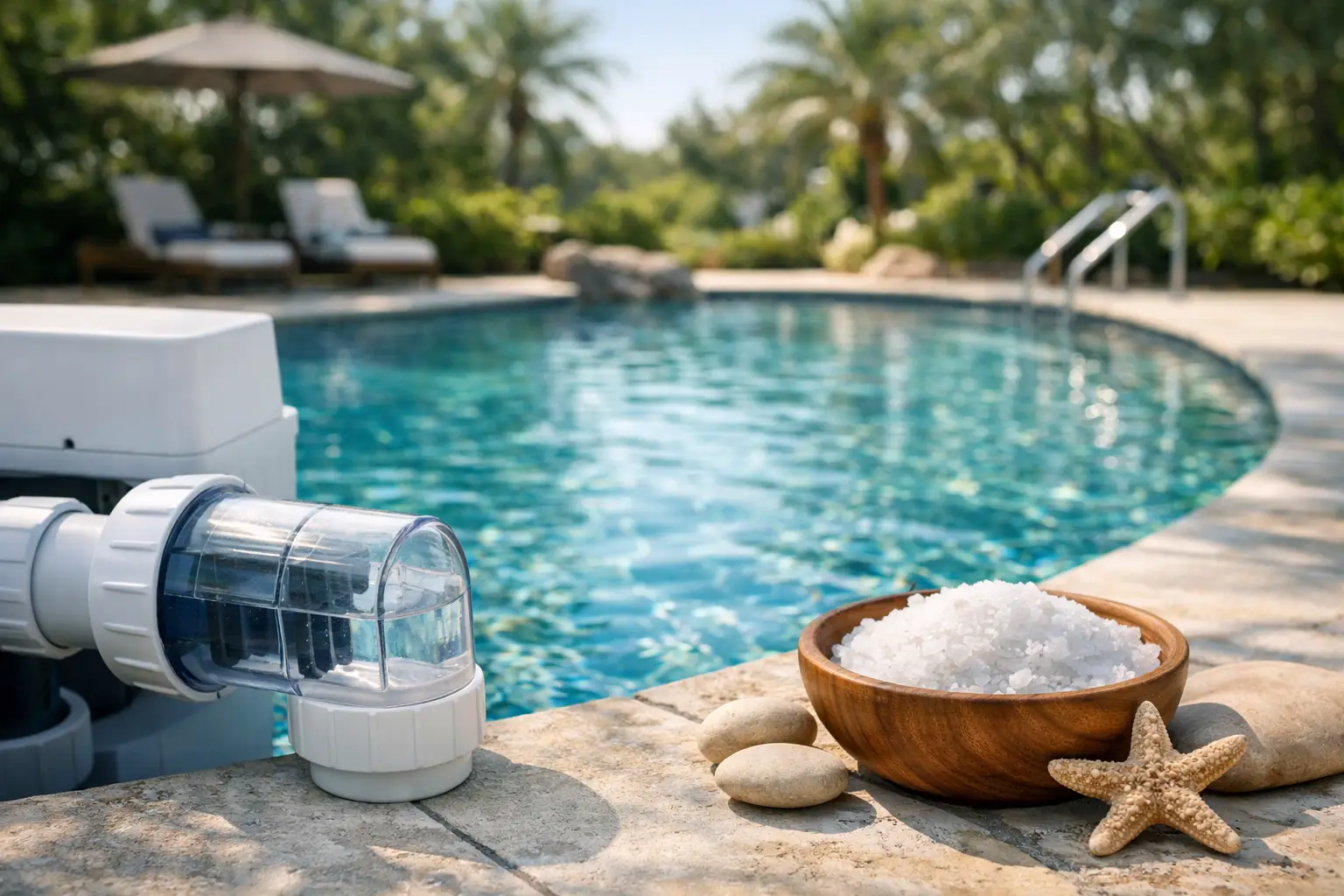
If you have spent summers topping up chlorine, dealing with strong chemical smells or trying to keep the water comfortable for guests, it is fair to ask: why is switching to a salt water pool better? For many Algarve property owners, the answer comes down to comfort, simpler day-to-day management and a more consistent swimming experience.
A salt water pool does not mean swimming in seawater. The salinity is much lower. What changes is how the pool sanitises itself. Instead of regularly adding traditional chlorine products in the usual way, a salt chlorinator converts dissolved salt into the sanitising agent the pool needs. The result is cleaner-feeling water and a system that works more steadily in the background.
Why is switching to a salt water pool better for everyday use?
The biggest difference most owners notice is the feel of the water. Salt water pools are usually gentler on the skin, eyes and hair than heavily chlorinated pools. That matters in family homes, holiday villas and accommodation settings where people may be swimming every day.
There is also less of the harsh chlorine odour many people associate with pools. In practice, that often means a more pleasant poolside environment, especially in enclosed patio areas or properties designed for relaxation and entertaining.
Another advantage is consistency. Manual chlorine dosing can fluctuate. One week the level is too high, the next it drops too low under strong sun and heavy use. A properly sized salt system helps maintain a steadier sanitising level, which supports water quality and reduces sudden corrections.
A better option for many Algarve properties
In the Algarve, pools work hard. Heat, sunlight, extended swimming seasons and holiday occupancy can all place extra demand on water treatment systems. A salt water setup can be a strong choice because it supports ongoing sanitation with less manual intervention.
For second homes, this is particularly useful. If the property is not occupied all year, owners often want dependable systems that reduce surprises and simplify maintenance visits. For rental properties, guest comfort matters just as much as technical performance. Water that feels softer and smells less chemical can improve the overall impression of the property.
This does not mean the pool becomes maintenance-free. It still needs professional checks, balanced water chemistry and equipment inspections. But many owners find the routine more manageable and the results more stable.
Cost: higher at the start, often better over time
One reason some people hesitate is the initial investment. A salt water pool requires a chlorinator and, in some cases, upgrades to existing equipment. If you are converting an older pool, the condition of the filtration system, pipework and finishes should also be reviewed.
Even so, the long-term picture is often favourable. You may spend less on packaged chlorine products over time, and many owners value the reduction in handling and storing chemicals. There is also the less obvious benefit of convenience. Fewer abrupt water quality problems can mean fewer urgent call-outs and fewer periods when the pool is not at its best.
The right decision depends on how often the pool is used, the age of the current system and the standard you want to maintain. In higher-use residential and tourist properties, the value of consistent performance can outweigh the higher installation cost.
What are the trade-offs?
A salt water pool is not automatically the better choice in every case. The system cell needs periodic cleaning and will eventually need replacing. Water balance remains essential, especially pH control. If that is neglected, the benefits drop quickly.
There are also material considerations. Some pools, accessories and surrounding finishes need to be assessed for compatibility and long-term exposure. A professional installation matters because poor sizing or incorrect setup can lead to disappointing results.
This is why conversion should be treated as an upgrade project, not just the addition of one piece of equipment. The pool’s structure, circulation, filtration and usage pattern all need to work together.
When switching makes the most sense
If your current pool is expensive to maintain, uncomfortable to swim in or due for equipment modernisation, a salt conversion is often worth serious consideration. It can also make sense during a renovation, when other components are already being updated.
For owners who want a cleaner-feeling pool with less day-to-day chemical handling, the benefits are clear. For property managers, the appeal is often reliability and guest satisfaction. For homeowners focused on comfort and long-term value, it can be a practical improvement rather than a luxury extra.
With more than 30 years of experience supporting pools across the region, POOLSHOP ALGARVE helps clients assess whether a salt water system is the right fit for their pool, property and maintenance needs. The best result comes from choosing the right equipment, installing it correctly and supporting it with proper technical care.
Switching to salt water is usually better when you want the pool to feel better, work more consistently and demand less reactive maintenance. If that sounds like the kind of upgrade your property needs, it is worth looking at the pool as a whole rather than the chlorinator alone.
Want more information on whether switching is better for your Pool? Contact @poolshopalgarve1 on Tel: 915244816 or email: poolshopalgarve@outlook.pt