

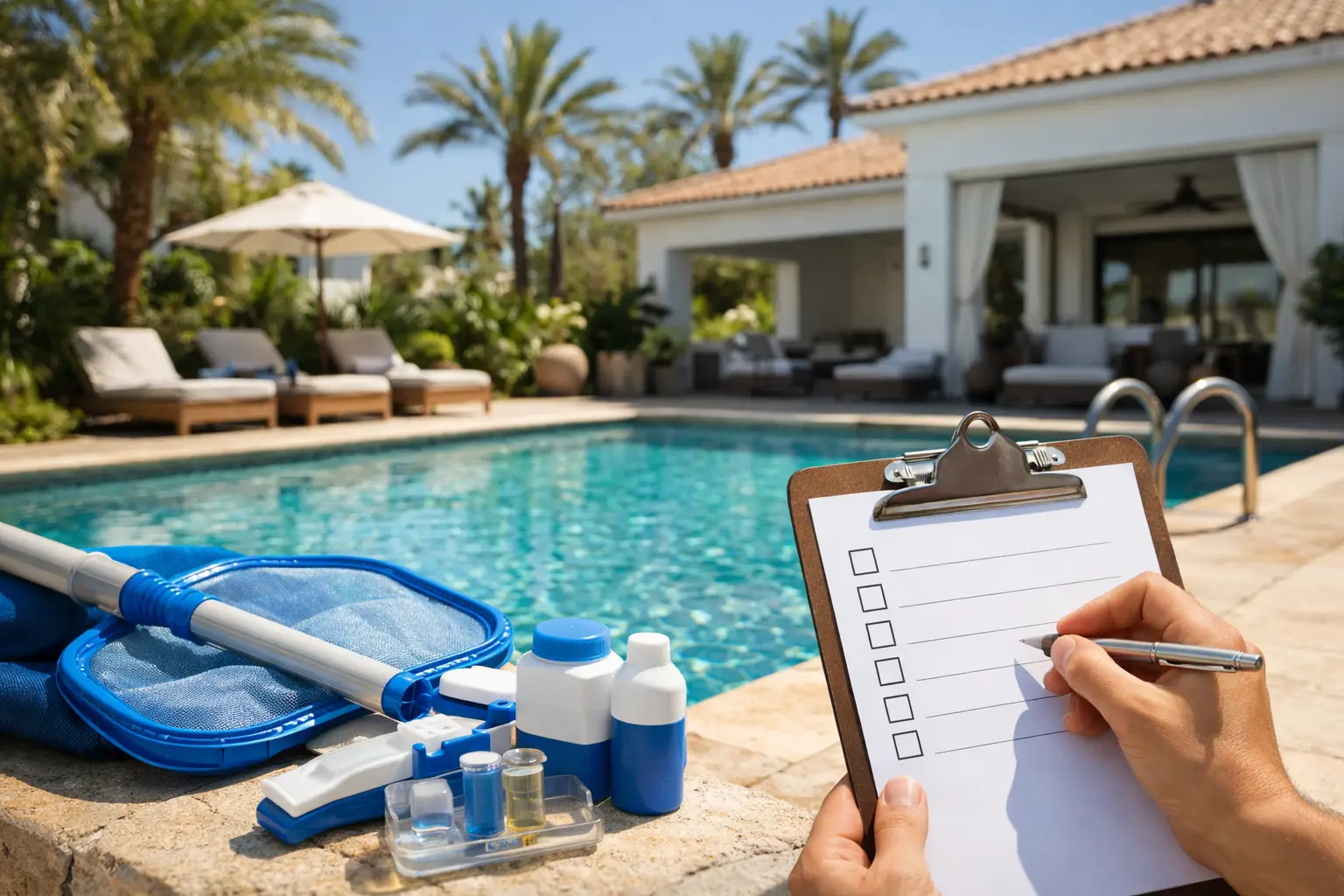
A villa pool can look perfect at 9 am and become a problem by late afternoon. A sudden rise in temperature, heavier guest use, wind-blown debris or a small equipment fault is often all it takes. That is why a proper pool maintenance checklist for villas is less about routine for its own sake and more about protecting the water, the equipment and the value of the property.
For villa owners in the Algarve, that matters even more. Pools here work hard through long warm seasons, high UV exposure and frequent use by family, guests and holiday renters. If maintenance slips, the first signs are usually cosmetic – cloudy water, marks on the waterline, leaves in the skimmer. Left alone, those small issues can turn into algae, poor circulation, chemical imbalance and avoidable repair costs.
Why a villa pool needs a stricter routine
A villa pool is not always used like a standard domestic pool. Some are occupied only seasonally. Others are used intensively in summer and then sit quieter in winter. Rental properties add another layer, because water quality and presentation affect guest satisfaction as much as safety.
This means maintenance should be planned around real use, not guesswork. A pool used every day by a large group will need different attention from one used occasionally by a couple. Likewise, an infinity pool, heated pool or saltwater system may require a slightly different approach from a basic chlorinated setup. The checklist stays broadly the same, but frequency and technical detail will depend on the pool.
Daily and weekly pool maintenance checklist for villas
The most reliable checklist starts with the essentials. These are the tasks that keep the pool visibly clean, chemically balanced and mechanically sound.
Check water clarity and surface condition
Start with a visual inspection. Water should be clear enough to see the floor and fittings easily. If it looks dull, cloudy or greenish, that is usually an early warning rather than a minor cosmetic issue.
At the same time, check the waterline for grease, sun cream residue or mineral build-up. In villas used by guests, this tends to appear quickly during hot weather. Removing it early is easier than dealing with stubborn staining later.
Empty skimmer and pump baskets
Leaves, insects and other debris restrict water flow faster than many owners expect. When baskets are too full, circulation suffers and the filtration system works harder than it should. That can also reduce the effectiveness of chemical treatment.
In periods of wind, nearby landscaping or heavy use, baskets may need checking more than once a week. This is especially true for larger outdoor pools with mature gardens around them.
Test and adjust water chemistry
A clean-looking pool is not always a balanced pool. Chlorine, pH and alkalinity should be checked regularly, with frequency based on usage and weather. In peak season, a villa pool often needs testing several times a week.
If pH is off, sanitiser becomes less effective and swimmers may notice irritation. If chlorine is too low, algae and bacteria gain ground quickly. If levels are too high, equipment and finishes can also suffer over time. Good maintenance is about balance, not excess.
Brush walls, steps and corners
Some areas always collect build-up faster than others. Steps, corners, behind ladders and around return inlets are common trouble spots. Brushing prevents biofilm and algae from taking hold before they become visible.
This is one of the most overlooked parts of a pool maintenance checklist for villas, especially when the water still looks acceptable from a distance. But brushing is preventative work, and preventative work is usually the cheapest kind.
Vacuum or use an automatic cleaner
Even with good circulation, dirt settles. Fine dust, sand and organic matter collect on the floor, particularly in Algarve properties exposed to dry weather and breezes. A manual vacuum or properly maintained automatic cleaner helps stop that debris from affecting water quality.
The method matters less than consistency. A cleaner that is rarely checked or a vacuum done too quickly will not solve much.
Equipment checks that prevent expensive repairs
Water treatment is only part of the job. A pool can have balanced chemistry and still develop serious issues if equipment is not monitored.
Inspect the filtration system
The filter is central to pool performance. Pressure readings should be checked regularly, and the filter should be cleaned or backwashed according to the manufacturer’s guidance and actual pool load. Doing this too rarely reduces filtration. Doing it too often is not ideal either, especially with some media types, because the system needs to settle into efficient operation.
If pressure climbs unusually fast, that may point to a dirt load problem, poor circulation or an issue elsewhere in the system.
Check the pump, timer and circulation
Listen to the pump. A change in sound often tells you something before a breakdown does. Air in the system, unusual vibration or inconsistent running times should be investigated early.
Timers also deserve attention, particularly in villas that are seasonally occupied. Filtration hours should reflect water temperature and usage. Running the system too little invites water problems. Running it far more than needed increases electricity costs without adding much benefit.
Look for leaks and wear
Check around valves, pipework, unions and equipment pads for damp patches, drips or corrosion. A small leak is easy to ignore until it becomes a larger repair or contributes to water loss that gets mistaken for evaporation.
Covers, lights, skimmers, ladders and stainless steel fittings should also be inspected. In coastal areas, salt air can accelerate wear on exposed elements if they are not maintained properly.
Seasonal priorities for villa pools
Not every month demands the same routine. Seasonal planning makes maintenance more efficient and more reliable.
Before peak summer use
This is the time for a deeper inspection. Water chemistry should be stabilised, filtration checked thoroughly and any worn parts replaced before demand increases. If the pool has heating, automatic dosing, lighting or a cover system, all should be tested before guests arrive or family use intensifies.
For rental villas, this pre-season stage is particularly important. A pool problem during a booked stay is not just an inconvenience. It can affect reviews, management time and the overall perception of the property.
During peak season
Expect higher chemical demand, faster debris accumulation and more strain on equipment. Sunscreen, body oils and continuous bathing all change the water more quickly. This is the period when maintenance should be most consistent, not most reactive.
If the property has frequent changeovers, pool checks should be tied to those dates. A quick glance between guests is not enough.
In quieter months
Reduced use does not mean no maintenance. Water still needs circulation, sanitation and inspection. The exact approach depends on whether the pool remains open, is heated, or is partially closed for winter.
Cutting maintenance too sharply in the off-season often creates extra work and cost when warmer weather returns.
Common mistakes villa owners make
The first is treating maintenance as a purely chemical task. Chemistry matters, but circulation, cleaning and equipment checks are equally important.
The second is assuming a clear pool is a healthy pool. Water can be out of balance long before it visibly changes.
The third is delaying small repairs. A noisy pump, a cracked basket lid or an unreliable timer may not stop the pool immediately, but these issues rarely fix themselves.
Another common mistake is using a one-size-fits-all schedule. The right checklist depends on pool size, finish, exposure, bather load and installed equipment. A heated family pool and a high-turnover rental pool should not be managed in exactly the same way.
When professional support makes the difference
Some owners are happy to handle basic checks themselves. That can work well, provided the routine is regular and someone knows what to watch for. But many villa owners, second-home owners and property managers prefer specialist support because it reduces risk and keeps standards consistent.
Professional maintenance is not only about saving time. It helps catch problems early, protects expensive equipment and ensures the pool matches the standard expected from a quality villa. That is especially valuable where occupancy changes, technical systems are more advanced, or the owner is not on site year-round.
For Algarve properties, working with an experienced local partner also means maintenance can be aligned with regional conditions, seasonal demand and the realities of coastal wear. POOLSHOP ALGARVE supports owners across the full pool lifecycle, from equipment and upgrades to ongoing care, with the practical experience that comes from more than 30 years in the sector.
A good checklist keeps a pool usable. A well-managed pool does more than that – it stays attractive, efficient and ready whenever the villa is in use. If you want fewer surprises and a better standard of care, consistency will always beat last-minute fixes.