
A pool rarely stops working all at once. More often, the signs appear gradually – cloudy water, weaker suction, unusual noises, or running times that seem longer than normal. If you are asking, how do I know if my pool equipment is not working correctly?, the best answer is to look for small changes before they become expensive repairs.
For pool owners in the Algarve, this matters even more. Heat, regular use, seasonal occupancy, and long filtration hours can all put extra pressure on pumps, filters, heat pumps, salt systems, and control equipment. When one component starts to underperform, the whole pool can feel the effect.
How do I know if my pool equipment is not working correctly?
In most cases, pool equipment gives clear warning signs. The difficulty is that many owners assume the issue is chemical, cosmetic, or temporary. If the water is losing clarity, the circulation feels weak, or the system is noisier than usual, the problem may be mechanical rather than just maintenance-related.
A healthy pool system should run quietly, circulate consistently, and keep the water clear without constant correction. If you find yourself topping up chemicals more often, cleaning more frequently, or noticing uneven performance, that usually points to equipment that is no longer operating as it should.
The most common warning signs
Cloudy or green water is often the first thing owners notice. While water balance plays a role, poor filtration, blocked baskets, a worn pump, or a failing sand filter can all stop water from being treated properly. If the chemistry seems correct but the water still looks poor, the equipment deserves attention.
Weak suction is another common sign. If the skimmer is not pulling in debris as it used to, or the vacuum head moves poorly, there may be a blockage, an air leak, or a pump issue. Sometimes the problem is simple, such as a full pump basket. At other times, it points to a seal, valve, or motor problem.
Unusual noises should never be ignored. A pump that hums loudly, rattles, screeches, or sounds rough is not behaving normally. These sounds can indicate worn bearings, trapped air, internal wear, or electrical strain. Equipment does not become noisy without a reason.
Water leaking around the plant room is another sign that something is wrong. Small leaks from unions, valves, filters, or pump housings can develop into larger failures. Even if the pool still appears to be running, water loss around the equipment area usually means a component needs repair or replacement.
When the problem is electrical or automated
Modern pools often depend on timers, lighting systems, heat pumps, salt chlorinators, and automatic control units. When these stop responding properly, owners may notice irregular operation rather than a complete shutdown.
For example, the pump may fail to start at the programmed time, the heat pump may run without heating effectively, or the salt system may show warning lights or produce inconsistent chlorine levels. Pool lights that flicker, control panels that reset, or breakers that trip repeatedly all point to faults that should be checked by a specialist.
Electrical issues are not just inconvenient. They can affect safety and lead to damage in connected equipment if left unresolved.
Signs specific to pumps, filters, and heat pumps
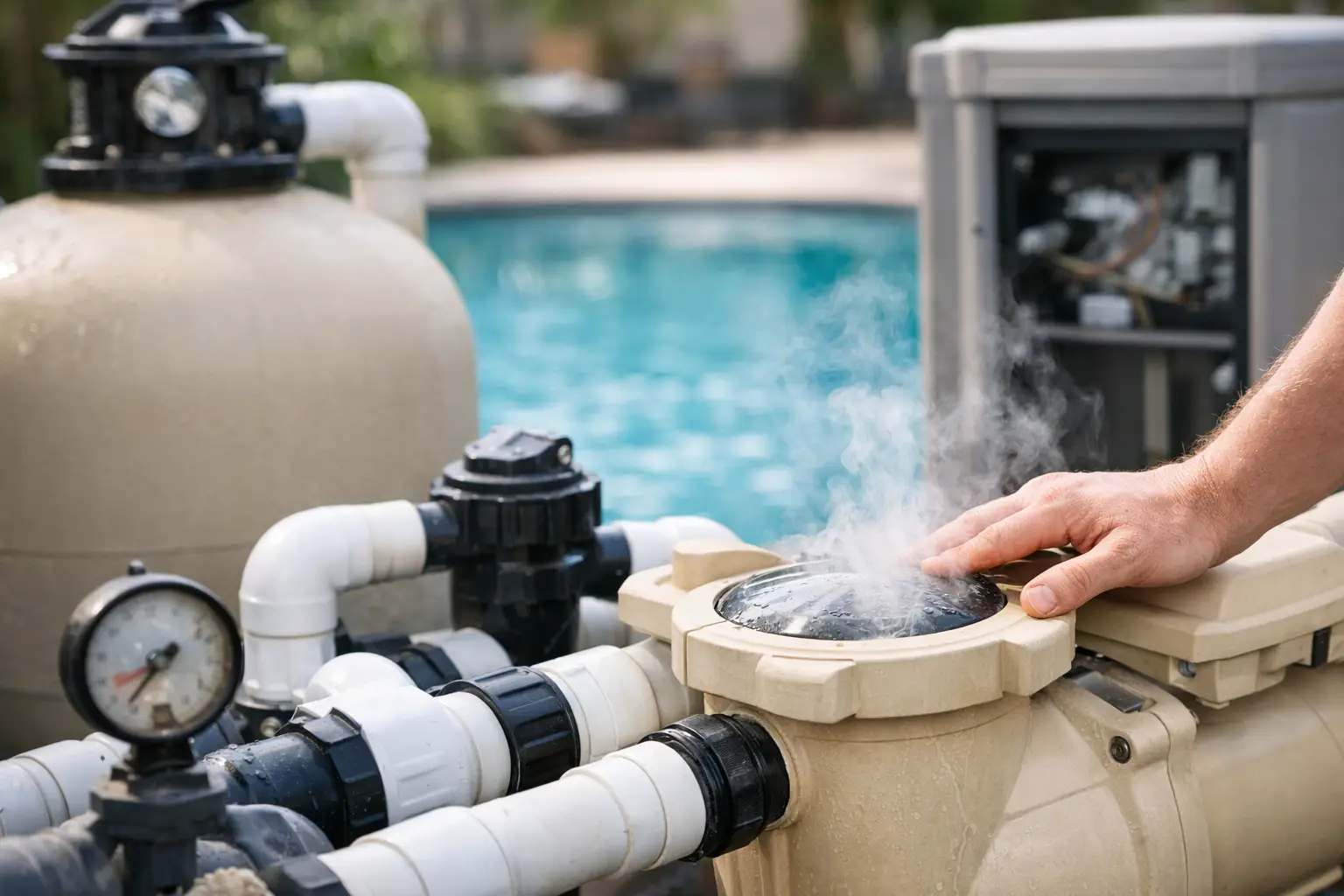
The pump is the heart of the circulation system, so any change in its behaviour matters. If it struggles to prime, loses pressure, or becomes hot to the touch, it may be working under stress. A pump that runs but does not move water properly is not functioning correctly, even if it has not stopped completely.
Filters also show clear signs of trouble. A sand filter that no longer clears the water efficiently, a cartridge that clogs too quickly, or pressure readings that stay unusually high or low can all indicate poor filtration performance. If backwashing does not restore normal operation, the filter media or internal parts may need inspection.
With heat pumps, the main warning sign is simple: the pool does not reach or maintain the expected temperature. Reduced heating efficiency, error codes, icing, or unusual fan noise often suggest the unit needs servicing. In a region where comfort and extended pool use are important, this can quickly become a practical issue.
What owners should check before calling for service
There are a few sensible checks you can make without taking risks. Make sure baskets are empty, water levels are correct, valves are in the proper position, and visible debris is removed. Look at the pressure gauge, note any warning lights, and pay attention to whether the system sounds different from usual.
What you should not do is ignore a pattern. If the same issue returns every few days, or if the pool only performs properly after constant intervention, the system likely needs technical attention. Repeated minor symptoms often lead to major failures.
Why early action saves money
Pool equipment usually becomes more expensive to repair when problems are left too long. A blocked line can overwork a pump. A neglected leak can damage surrounding components. Poor filtration can increase chemical use and shorten the life of other equipment.
That is why regular inspection and timely servicing are more cost-effective than waiting for a full breakdown. For second homes, rental properties, and managed developments, this is especially important because unnoticed faults can develop quickly between visits.
At POOLSHOP ALGARVE, we often see cases where an early check would have prevented a larger repair. If your pool is showing unusual behaviour, the safest approach is to assess the system before water quality, comfort, or reliability declines further. A well-maintained pool should feel easy to own – and when it stops feeling that way, the equipment is usually telling you something.