
The water looks clean until the day it stops being so. Anyone with a swimming pool in a detached house, holiday let or development in the Algarve knows that appearances can be deceptive. Without the proper pool water treatment equipment, what looks crystal-clear today can quickly become cloudy, chemically unbalanced, suffer premature wear and lead to unnecessary maintenance costs.
Choosing the right equipment is not just about keeping the water looking good. It is about protecting the investment, reducing corrective interventions and ensuring safe and comfortable use for longer. When the system is properly sized, the pool needs less day-to-day effort and copes better with temperature variations, heavy use and solar exposure.
■ What really makes a difference in water treatment
There is a common idea that treating water simply means adding products. In practice, the outcome depends on the whole package. Filtration, circulation, disinfection and control work as a team. If one of these parts fails, the others are left compensating, often with higher consumption and reduced effectiveness.
Therefore, when assessing pool water treatment equipment, the most important thing is to understand how each component contributes to water stability. A small pool for occasional use does not require exactly the same solution as a seasonal rental pool or a facility used frequently by many people. This is where technical experience makes a difference, because the most expensive option is not always the most suitable, and the cheapest can become very costly by the end of a season.
■ Essential pool water treatment equipment
■ Filtration system
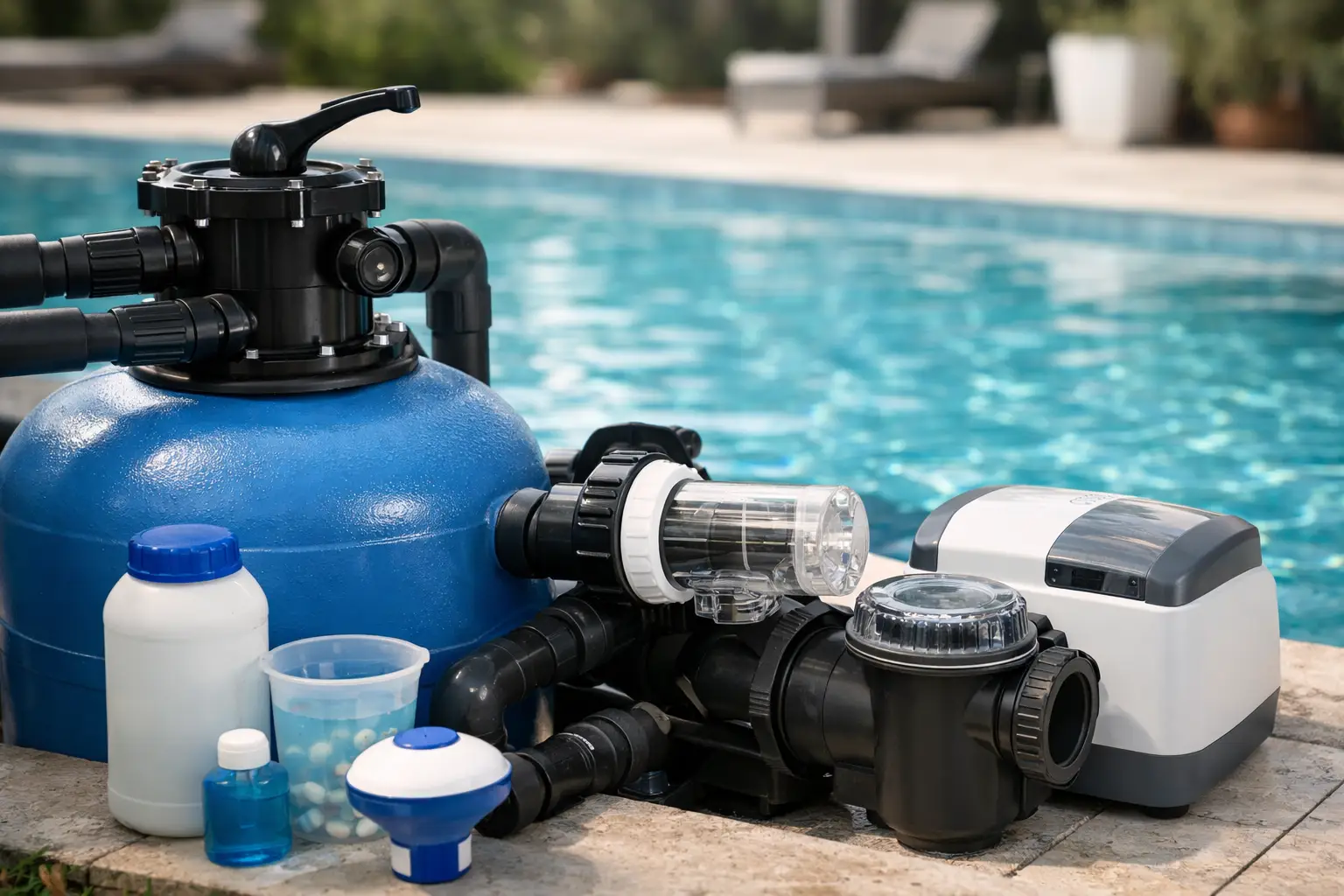
The filter is one of the central elements of the whole system. It traps suspended particles and helps keep the water visually clean. Sand filters remain a widely used solution because of their reliability and relatively simple maintenance. In many cases, they offer a good balance between performance, durability and running cost.
There are also solutions with other filter media that can improve filtration fineness or reduce the frequency of certain maintenance operations. The choice depends on the pool volume, intensity of use and the desired level of performance. The most common mistake is undersizing the filter. When that happens, water quality degrades faster and the system works under greater strain.
■ Circulation pump
The pump is responsible for moving water through the circuit. Without efficient circulation, chemical treatment is not distributed properly and filtration loses effectiveness. A pump poorly matched to the size of the pool can generate high energy consumption or insufficient circulation.
Today, in many projects, it makes sense to consider more efficient pumps, especially when the pool is used regularly or when the owner seeks to reduce operating costs. It is not always a question of maximum power. Often the best result comes from a balanced, quiet solution designed to operate consistently over time.
■ Disinfection system
Disinfection can be achieved by different methods, and this is an important decision. Traditional chlorine treatment remains effective and widely used. When well managed, it provides reliable control and good results. However, some owners look for more convenient solutions or those involving less direct handling of chemicals.
Salt electrolysis systems have gained prominence for precisely these reasons. They allow continuous, convenient disinfection and often provide a more pleasant bathing experience. Even so, they are not an automatic choice for every pool. They require compatibility with the installation, proper control and technical follow-up to ensure stable performance.
■ PH control and automatic dosing
A pool can have good filtration and good disinfection, but if the pH is out of the correct range the system will not work as it should. PH affects the effectiveness of disinfectants, swimmer comfort and the preservation of materials.
This is why measurement and automatic dosing systems have become highly valued, particularly in holiday homes, tourist units and properties with irregular occupancy. These devices help keep parameters more stable and reduce the need for frequent manual corrections. The benefit is not only practical. It also helps avoid product overdosing and fluctuations that end up damaging the water and equipment.
■ Efficiency, comfort and long-term costs
When speaking of investment, it makes sense to look beyond the initial price. Poorly chosen equipment leads to higher energy use, more chemicals, more breakdowns and more time spent on fixes. On the other hand, a well-planned system tends to provide predictability, which is very important for those managing a seasonal home or accommodation that must remain presentable without failures.
There is also a comfort factor that increasingly matters. Many clients look for solutions that simplify routine and reduce dependence on constant interventions. Automating certain functions can be a clear advantage, especially when the pool is not always under direct supervision.
At the same time, it is sensible to avoid excess. Not every pool needs the highest level of automation. In some cases, a simpler configuration, if well adjusted, perfectly meets the property’s needs. The right decision always depends on the usage profile.
■ How to choose the right equipment for each pool
Before selecting pool water treatment equipment, it is essential to assess the real context of the installation. Water volume is only the starting point. Also important are solar exposure, frequency of use, presence of trees or dust, type of finish, available plant room space and the owner’s objectives in terms of comfort and maintenance.
A pool at a main residence tends to have more predictable usage patterns. In a holiday home or tourist accommodation, peak periods can be intense and concentrated. That changes how the system should respond. In such situations, having stable, easy-to-control equipment is a practical and financial advantage.
Another important point is compatibility between components. Installing good equipment in isolation does not guarantee a good result if the whole is not balanced. Pump, filter, treatment and automation should operate coherently. This is where professional support prevents many future problems.
■ Signs that it is time to modernise
You do not always need to wait for a total breakdown. There are clear signs that the system is no longer responding as it should. Water that frequently loses quality, increased chemical consumption, excessive noise in the plant room, constant need for manual adjustments or difficulty maintaining stable parameters are indications of wear or inadequacy.
In older pools, modernisation can bring immediate gains. Better energy efficiency, greater comfort of use and a lower likelihood of failures during peak season are real benefits. Often a well-thought-out update solves recurring problems that the owner had come to accept as normal, but which actually result from an outdated system.
■ The importance of local technical support
In the Algarve, pool usage conditions impose specific demands. High temperatures, intense solar exposure and pronounced seasonal use require reliable, well-adjusted solutions. Therefore, more than just buying equipment, it makes a difference to have technical guidance, correct installation and ongoing assistance.
An experienced partner can recommend what makes sense for each pool without complicating the decision with unnecessary technicalities. This approach is especially useful for owners who value peace of mind, for accommodation managers who need consistency and for those who wish to protect a property asset with serious, long-term maintenance.
With more than 30 years’ experience, POOLSHOP ALGARVE supports these decisions in a practical and secure way, from the choice of equipment to support throughout the pool’s service life.
Choosing well today avoids having to correct a lot tomorrow. In a pool, water quality does not depend on luck; it depends on the right system for the right use — and that makes all the difference when the goal is confidence, comfort and fewer worries throughout the year.