

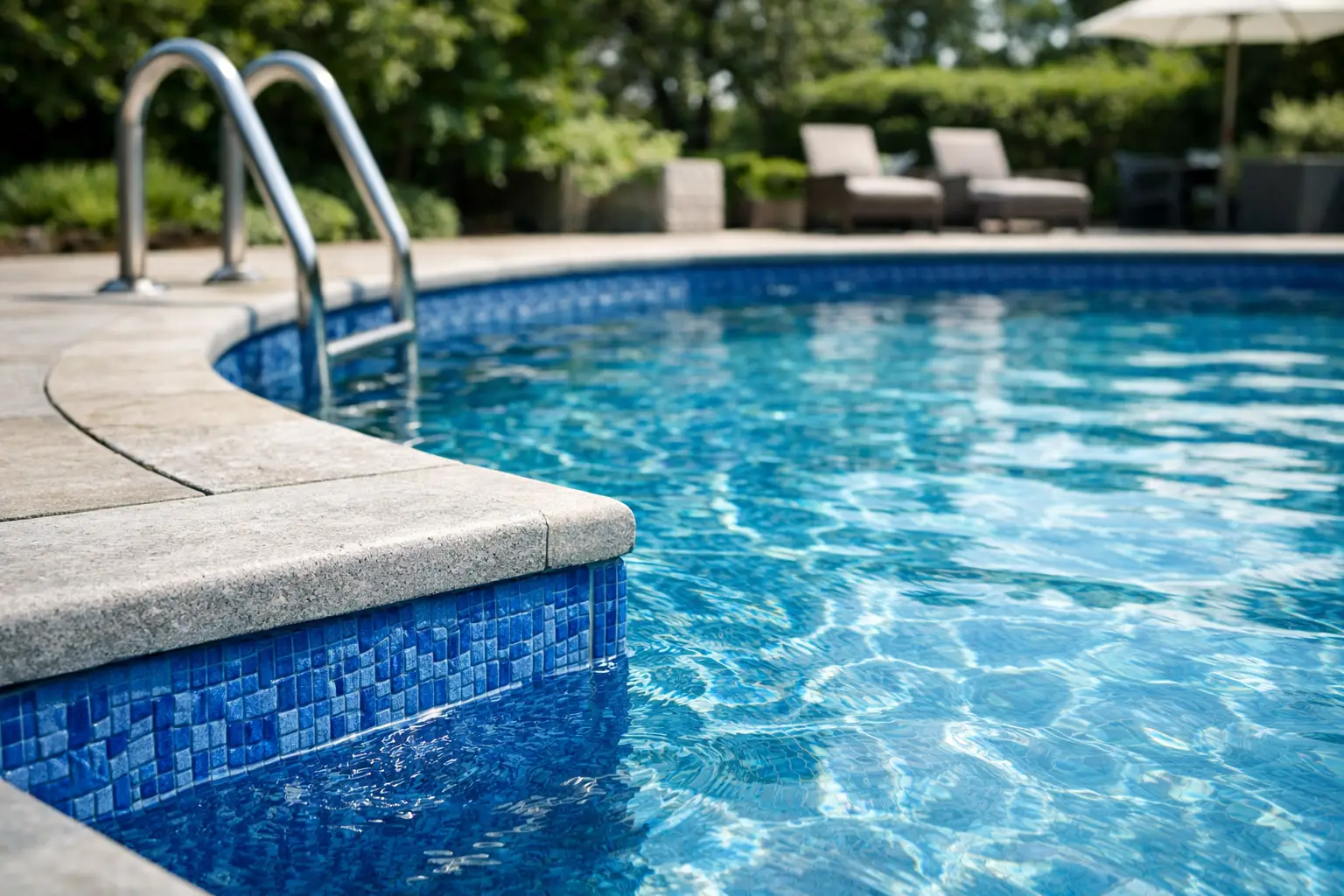
A tired pool surface rarely fails all at once. It starts with fading, small stains, rough patches, broken tiles or joints that no longer look clean. That is why reinforced liners are the most efficient for your pool – but did you know there are so many options to choose from? For many pool owners in the Algarve, a reinforced liner is one of the most practical ways to renovate a pool, improve appearance, and gain a durable watertight finish without major structural work.
Why reinforced liners are often the most efficient choice
A reinforced liner is a thick, flexible membrane designed to line the inside of the pool and create a watertight, attractive surface. Compared with more disruptive renovation methods, it can be installed with less downtime and with excellent visual results. That makes it especially appealing for private homes, second residences, holiday properties, and managed accommodation where time, reliability, and long-term maintenance all matter.
Efficiency, however, is not only about the initial installation. It is also about how the pool performs over time. A good reinforced liner resists wear, tolerates temperature variation well, and simplifies future maintenance. If the existing shell has cosmetic ageing but remains structurally sound, this option can be far more sensible than a complete rebuild.
Reinforced liners are the most efficient for your pool – but which type?
This is where many owners are surprised. There is no single reinforced liner for every pool. The best option depends on the pool shape, how heavily it is used, the desired finish, and whether safety or visual impact is the priority.
Thickness is one of the first choices. Heavier liners generally offer greater durability and are often preferred for pools with frequent use or where long service life is a priority. For a residential pool used seasonally, one specification may be more than enough. For a rental property or development, it often makes sense to choose a more resistant finish from the start.
The surface appearance also varies more than most people expect. Some clients want a classic blue that keeps the water looking bright and familiar. Others prefer sand, grey, or more contemporary tones that give the pool a calmer, more architectural look. The liner colour affects not only the design of the pool but also how the water itself appears in different light conditions.
Then there is texture. Smooth finishes are elegant and easy to clean, but textured or anti-slip surfaces can be the better choice for steps, shallow entry areas, or pools used by children and older adults. In the right places, this detail improves safety without compromising the overall result.
What to consider before choosing
The pool’s current condition should always come first. If there are cracks, movement, damaged fittings, or outdated accessories, these issues need to be assessed before installation. A reinforced liner can solve many surface and waterproofing problems, but it is not a substitute for correcting underlying structural defects.
Design compatibility matters too. A pool with Roman steps, overflow details, integrated lighting, or custom features may require more careful planning and finishing work. This is where experience makes a real difference. Precise measuring, correct welding, and proper detailing around skimmers, inlets, lights, and corners will influence both appearance and lifespan.
Use pattern is another factor that should not be ignored. A pool in a family home may have very different demands from one in a local accommodation business. Frequent use, stronger chemical exposure, and stricter presentation standards can justify a more premium specification.
The finish changes more than the look
Many clients initially focus on colour, but the finish affects the whole experience of the pool. A darker liner can create a more sophisticated effect, yet it may also show scale or debris differently. Lighter tones often feel cleaner and more traditional, though they can reveal marks in another way. There is no universal best choice – only the best choice for the property, the setting, and the owner’s priorities.
Patterned finishes can also help disguise minor visual imperfections and add personality to the pool. Stone-effect or mosaic-style designs are popular where the aim is to renovate an older pool and give it a more updated look without changing the entire surrounding area.
Installation quality matters as much as the material
Even the best liner will disappoint if the substrate preparation is poor or the detailing is rushed. The surface underneath must be properly prepared, fittings checked, and the membrane installed with technical precision. A well-executed installation should look clean, feel even underfoot, and perform reliably for years.
That is why property owners often benefit from working with a company that understands the full pool system, not only the liner itself. Equipment condition, circulation, accessories, and the general state of the pool should be considered together. With more than 30 years of experience in pool construction, renovation, equipment, and technical support, POOLSHOP ALGARVE approaches reinforced liner projects with that wider view.
Choosing the right option for your pool
The right reinforced liner is the one that matches the pool’s condition, the style of the property, and the level of use expected over time. For some owners, the priority is quick, efficient renovation. For others, it is a premium finish, safer steps, or a surface that stands up well in a busy rental setting.
A reinforced liner is often the most efficient route, but the best result comes from choosing carefully rather than choosing quickly. When the material, finish, and installation method are all aligned, the pool not only looks better – it becomes easier to live with, easier to maintain, and better suited to the property for years ahead.
Contact our experts today to receive our catalogue and the range of choices we have available. Installion is fact, efficent and they come with a guarantee! Tel: 915244816 or email: poolshopalgarve@outlook.pt