
A pool rarely stops working all at once. More often, the warning signs build up slowly – higher electricity bills, weaker circulation, noisy pumps, cloudy water, or equipment that needs constant attention. If you have been asking when do I need to replace my pool equipment, the answer usually comes down to performance, safety, efficiency, and age rather than a single breakdown.
For pool owners in the Algarve, this matters even more. A heavily used residential pool, holiday property, or tourist accommodation puts equipment under regular strain, especially during long hot periods. Waiting too long can turn a straightforward replacement into a larger repair involving water quality issues, leaks, or damage to other components.
When do I need to replace my pool equipment?
In practical terms, you should consider replacement when equipment is no longer working efficiently, repairs are becoming frequent, or the unit is reaching the end of its normal service life. A pump that still runs but has become loud, unreliable, or expensive to operate may already be costing you more than a modern replacement.
The same applies to filters, salt systems, heat pumps, lighting, and control panels. If the equipment is struggling to keep water clear, maintain temperature, or operate safely, replacement is often the smarter long-term decision. The cheapest option in the short term is not always the most economical over several seasons.
Typical lifespan of key pool equipment
Pool pumps often last around 8 to 12 years, depending on usage, maintenance, and installation quality. Filters can also give many years of service, but internal parts, valves, and pressure performance tend to show wear over time. Salt chlorinators and control units may need replacement sooner if cells wear out or electronics become unreliable.
Heat pumps usually have a solid lifespan when correctly sized and maintained, but corrosion, reduced heating capacity, or repeated faults are signs that age is catching up. Underwater lighting can also become a replacement issue, especially with older fittings that are less efficient or no longer properly sealed.
These are only general ranges. A pool in a private villa used occasionally will age differently from a pool serving guests throughout the season. Usage patterns matter just as much as the manufacturing date.
Signs your pump or filtration system is due for replacement
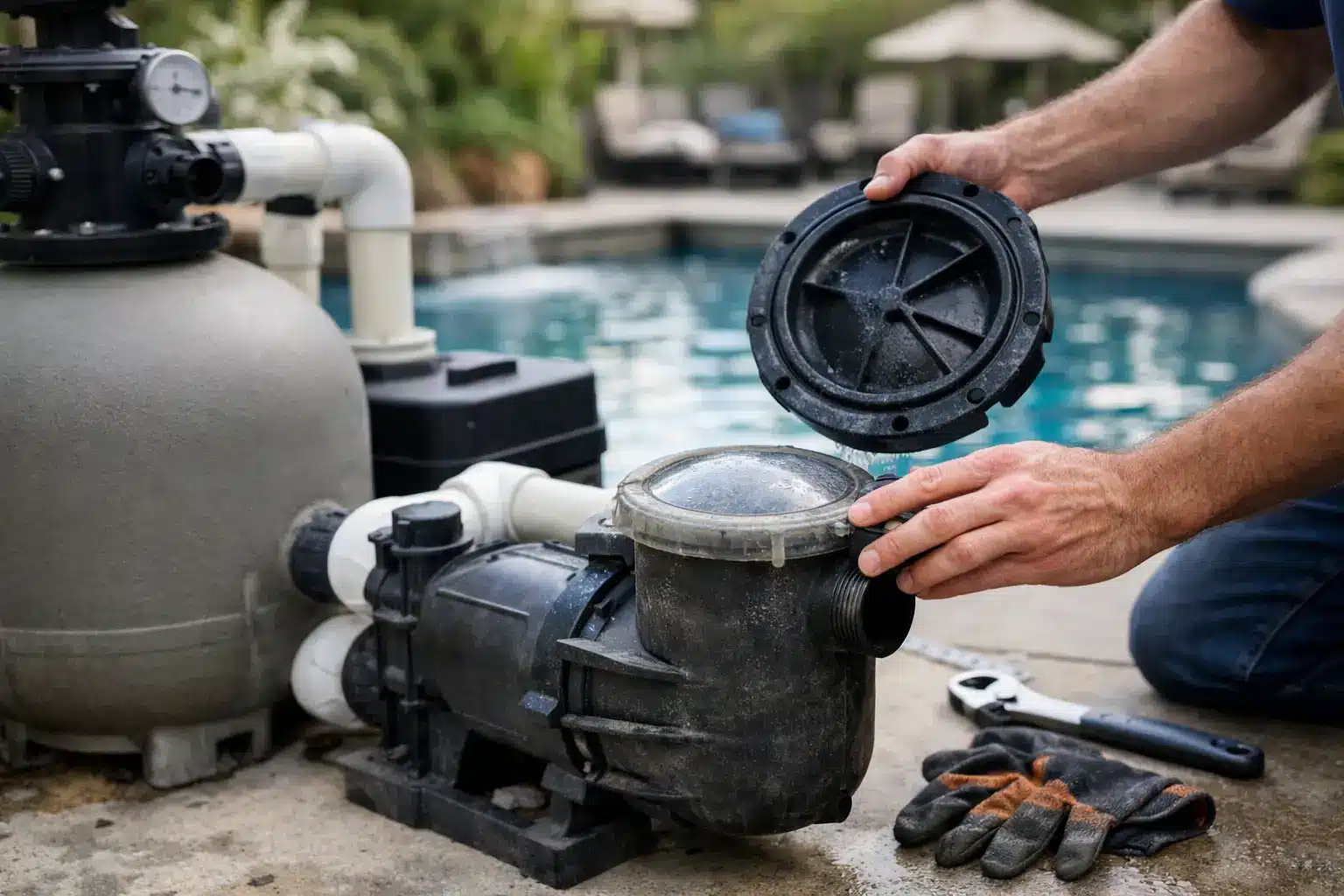
The pump and filter do most of the hard work, so they are usually the first place to look. If the pump is making unusual noises, losing prime, overheating, or tripping the electrics, there is a strong chance it is nearing replacement time. Persistent vibration can also point to worn bearings or internal damage.
With filters, the signs are often more gradual. Water may stay dull even with correct chemical balance. Pressure may rise too quickly after cleaning, or the system may not circulate water evenly. Cracks in the filter tank, leaking multiport valves, or recurring maintenance issues usually mean replacement should be considered rather than another temporary fix.
Efficiency matters as much as breakdowns
Not all old equipment is broken, but much of it becomes expensive. Older pumps often consume far more electricity than newer variable-speed models. An ageing heat pump may still run, but take longer to heat the water and use more energy doing it.
This is where replacement becomes an upgrade rather than a repair decision. Modern equipment can improve running costs, reduce noise, and make day-to-day management easier. For second homes and rental properties, reliability is especially valuable because unexpected failures can disrupt guests and create urgent call-outs.
Safety and compliance should not be ignored
Some replacements are not optional for long. Damaged electrical components, ageing lights with sealing issues, cracked housings, or corroded stainless steel fittings can become safety concerns. If skimmers, suction points, control boxes, or covers are deteriorating, the problem is not only cosmetic.
Older systems may also be harder to service because parts are obsolete or no longer recommended. In those cases, replacing equipment is often the safer and more practical route. A modern system installed correctly gives greater peace of mind and usually simplifies future maintenance.
Repair or replace?
A good rule is to compare the cost of repair with the age and condition of the equipment. If a relatively new unit has one isolated fault, repair is often sensible. If the equipment is older and repairs are becoming regular, replacement usually offers better value.
You should also think about the wider system. Replacing one weak component can sometimes expose problems elsewhere, especially if the pool has had piecemeal fixes over many years. A professional assessment helps identify whether you need a single replacement or a more coordinated equipment upgrade.
Why professional inspection saves money
Pool equipment does not always fail in an obvious way. Reduced flow, uneven heating, poor sanitation, and excessive energy use can all point to underlying inefficiency rather than a visible breakdown. That is why inspection by an experienced specialist is worthwhile before the high season begins.
For Algarve property owners, this is particularly useful for homes that sit empty part of the year or pools that need to be guest-ready at short notice. A local technical partner can check pump performance, filtration, salt systems, lighting, and heating before minor wear becomes a bigger interruption.
With more than 30 years of experience, POOLSHOP ALGARVE supports the full pool lifecycle, from construction and renovation to equipment supply and replacement. If you need clear advice on whether to repair, modernise, or replace your pool equipment, speaking to a specialist now is usually far easier than dealing with a failure in the middle of summer. For tailored support, contact 915 244 816.