

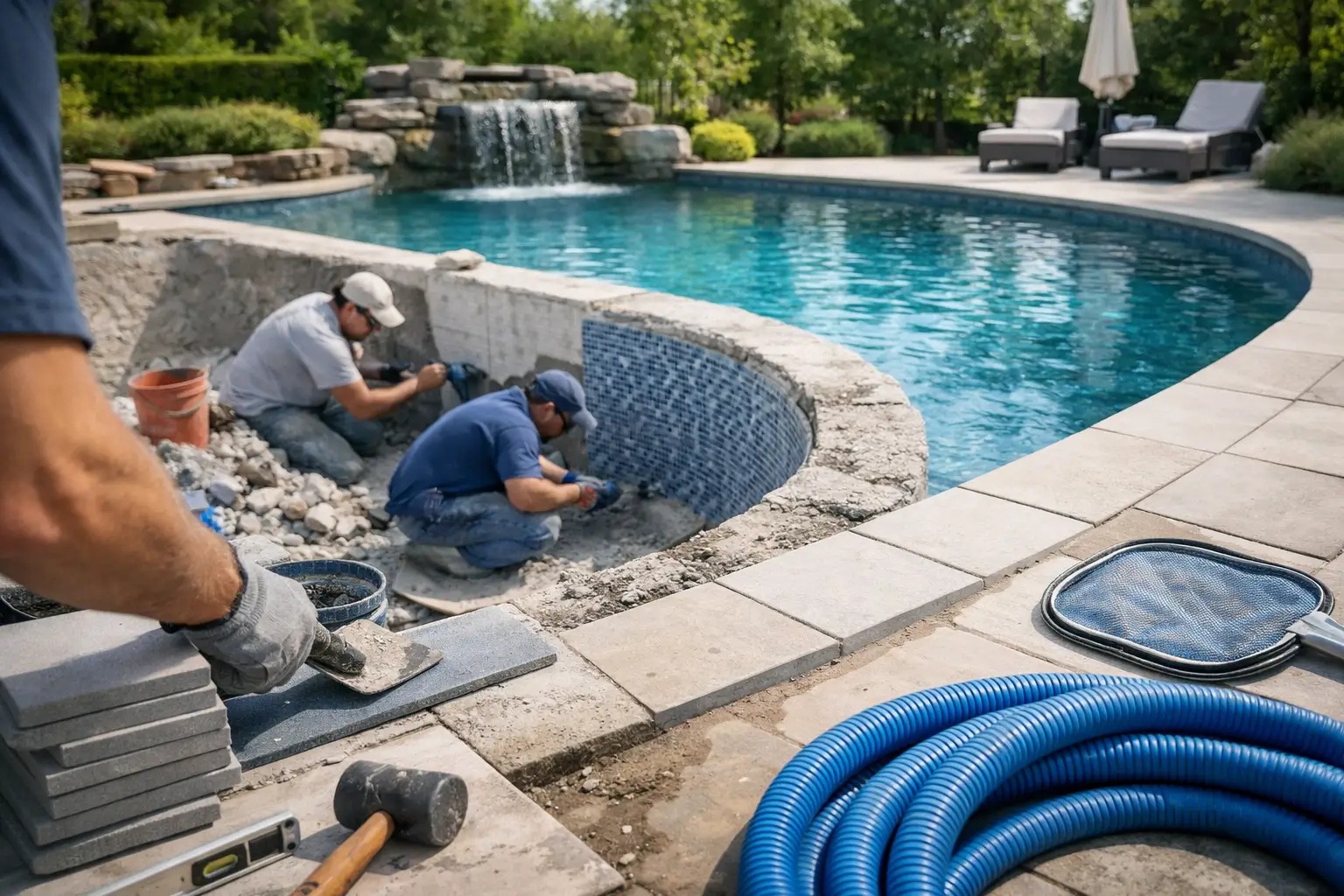
A pool rarely asks for attention all at once. More often, the signs build slowly – faded finishes, cracked tiles, rising energy bills, tired lighting, or a filtration system that no longer keeps water as clear as it should. A good residential pool renovation guide helps you recognise when small issues are becoming larger ones, and how to plan improvements that protect both comfort and property value.
In the Algarve, renovation decisions are often shaped by heavy seasonal use, strong sun exposure, and the expectations that come with second homes, holiday properties, and high-standard residential living. For some owners, the priority is appearance. For others, it is efficiency, safety, or reducing maintenance problems. In many cases, the best result comes from treating renovation as a complete upgrade rather than a series of disconnected repairs.
When a pool renovation makes sense
Not every pool needs a full rebuild. Sometimes, replacing a liner, updating the filtration, or improving circulation is enough to extend the life of the installation significantly. The key is knowing the difference between cosmetic wear and structural or technical decline.
Surface deterioration is one of the clearest warning signs. If the finish is rough, stained, chipped, or visibly aged, the pool may be losing not only its appearance but also its ease of maintenance. Older surfaces tend to trap dirt and algae more easily, which means more chemicals, more labour, and less satisfaction.
Equipment age is another common factor. Pumps, filters, skimmers, underwater lighting, heating systems, and covers all have a working lifespan. If parts are becoming unreliable or inefficient, renovation can reduce ongoing running costs and improve the day-to-day experience of owning the pool. This is especially relevant for properties used seasonally, where owners want dependable performance without repeated callouts.
There are also cases where the pool functions adequately but no longer suits the property. A house renovation, upgraded outdoor area, or change in how the pool is used may justify a redesign. A deeper refurbishment can bring the pool in line with the rest of the home and create a more coherent finish.
Residential pool renovation guide: start with the right assessment
Before choosing materials or equipment, the first step is a proper technical assessment. This avoids spending money on visible improvements while hidden issues remain untreated. A pool can look tired because of age, but it can also be showing signs of leakage, failing hydraulics, poor circulation, or outdated installation methods.
A sound assessment usually considers the condition of the shell or structure, the finish, pipework, filtration system, skimmers, lights, coping, surrounding areas, and any accessories such as covers or heating. For liner pools, the liner condition, fitting quality, and support surfaces should also be reviewed carefully.
This stage matters because renovation budgets can vary widely. A straightforward liner replacement or equipment update is very different from a project involving structural correction, reshaping, or extensive remodelling. Getting clarity early helps avoid false economies. It is often cheaper to resolve root causes properly than to repeat partial repairs over several seasons.
Choosing between repair, upgrade and full remodelling
A practical residential pool renovation guide should make one point clear: the right scope depends on the pool’s condition, the property standard, and the owner’s goals.
If the structure is sound and the main issue is wear, a targeted renovation may be enough. This can include replacing the liner, renewing interior finishes, updating tiles, changing fittings, or installing modern lighting. These projects can transform the visual impact of the pool without unnecessary structural work.
If the equipment is outdated, a technical upgrade may offer the best return. Modern pumps, improved filtration, efficient heat pumps, salt treatment systems, and better covers can reduce energy use and simplify maintenance. The savings may not appear in a single month, but over time they can be substantial, particularly for larger pools or regularly occupied homes.
A full remodel makes more sense when the pool has multiple issues at once or no longer meets the owner’s expectations. This might involve redesigning entry steps, replacing surrounding finishes, improving safety features, integrating stainless steel details, or creating a more contemporary appearance. For premium residential properties, a remodel often has value beyond function because it supports the overall presentation of the home.
The upgrades that make the biggest difference
Not every upgrade carries the same weight. Some improve looks; others change how the pool performs every day.
Surface renewal is one of the most visible improvements. Whether the project involves a new liner or another finish solution, a fresh interior immediately changes the feel of the pool. It can also make cleaning easier and improve water appearance.
Filtration and circulation upgrades tend to be less glamorous, but they are often the smartest investment. Water clarity, hygiene, and chemical stability all depend on good hydraulic performance. If the system is undersized, ageing, or inefficient, modernisation can solve recurring problems that owners may have accepted for years.
Lighting is another upgrade with strong impact. Modern underwater lighting improves evening use, enhances ambience, and can update the whole outdoor setting with relatively contained intervention. Likewise, a suitable cover can improve safety, reduce debris, limit evaporation, and support heat retention.
Heating should be considered carefully. Not every residential pool needs it, but for owners who want a longer bathing season or more consistent water temperature, a heat pump can make the pool more usable across more months of the year. The decision depends on usage patterns, exposure, and expectations.
Materials and finish choices in the Algarve
Local conditions matter. In the Algarve, sun exposure, heat, and seasonal occupancy should influence renovation choices. Materials need to be durable, practical, and suitable for the way the property is used.
Some owners prioritise a refined visual finish that complements landscaping and architecture. Others want low-maintenance solutions for holiday homes or rental properties. Neither approach is wrong, but the decision should be deliberate. A beautiful finish that demands constant care may not suit a property that is empty for part of the year. Equally, a purely functional renovation may feel out of place in a high-end home.
This is where experienced guidance is valuable. The best specification is rarely the most expensive option on the page. It is the one that balances appearance, durability, maintenance, and long-term reliability.
Budget, timing and disruption
Renovation costs depend on scope, access, materials, and technical complexity. A smaller update can be completed relatively quickly, while more extensive remodelling requires careful planning. Timing also matters in the Algarve, where many owners want work completed outside peak usage periods.
It is sensible to plan ahead rather than wait for a failure in mid-season. Emergency work is rarely the most efficient route, and it limits your choices. When renovation is scheduled properly, there is more time to assess alternatives, order suitable equipment, and coordinate all parts of the job.
Disruption varies by project. Replacing equipment may be fairly contained. Structural renovation, resurfacing, or redesign of surrounding areas is more involved. A good contractor should be clear about what is being done, how long it will take, and where unforeseen issues could affect timing or cost.
Working with one specialist partner
Pool renovation tends to run more smoothly when design, technical work, equipment supply, and finishing details are handled with a joined-up approach. This avoids the common problem of one supplier blaming another when issues arise.
For homeowners, property managers, and tourism-related properties, continuity matters. It is reassuring to deal with a specialist partner who understands the full pool lifecycle – from diagnosis and renovation to equipment replacement and ongoing technical support. That approach reduces delays, improves accountability, and usually leads to better long-term results.
With more than 30 years of experience in the sector, POOLSHOP ALGARVE supports residential clients across renovation, equipment upgrades, liners, remodelling, and technical solutions tailored to each pool.
Residential pool renovation guide: what to decide before you start
Before any work begins, it helps to be clear on a few practical points. Decide whether your priority is appearance, efficiency, lower maintenance, improved safety, or a complete upgrade. Think about how often the pool is used, who uses it, and whether the property is owner-occupied, seasonal, or intended for guests.
It is also worth considering the next five to ten years, not only the next summer. If you are already opening the pool for major work, there may be value in combining improvements rather than treating each issue separately. Replacing finishes without addressing ageing equipment, for example, can leave part of the problem unresolved.
A well-planned renovation should not feel like a patch. It should leave the pool easier to manage, better to use, and more in keeping with the quality of the property around it.
The best time to renovate a pool is usually before it starts limiting your enjoyment of the home. If the pool is showing its age, that is not just a maintenance issue – it is an opportunity to make the space work better for the way you live now.