

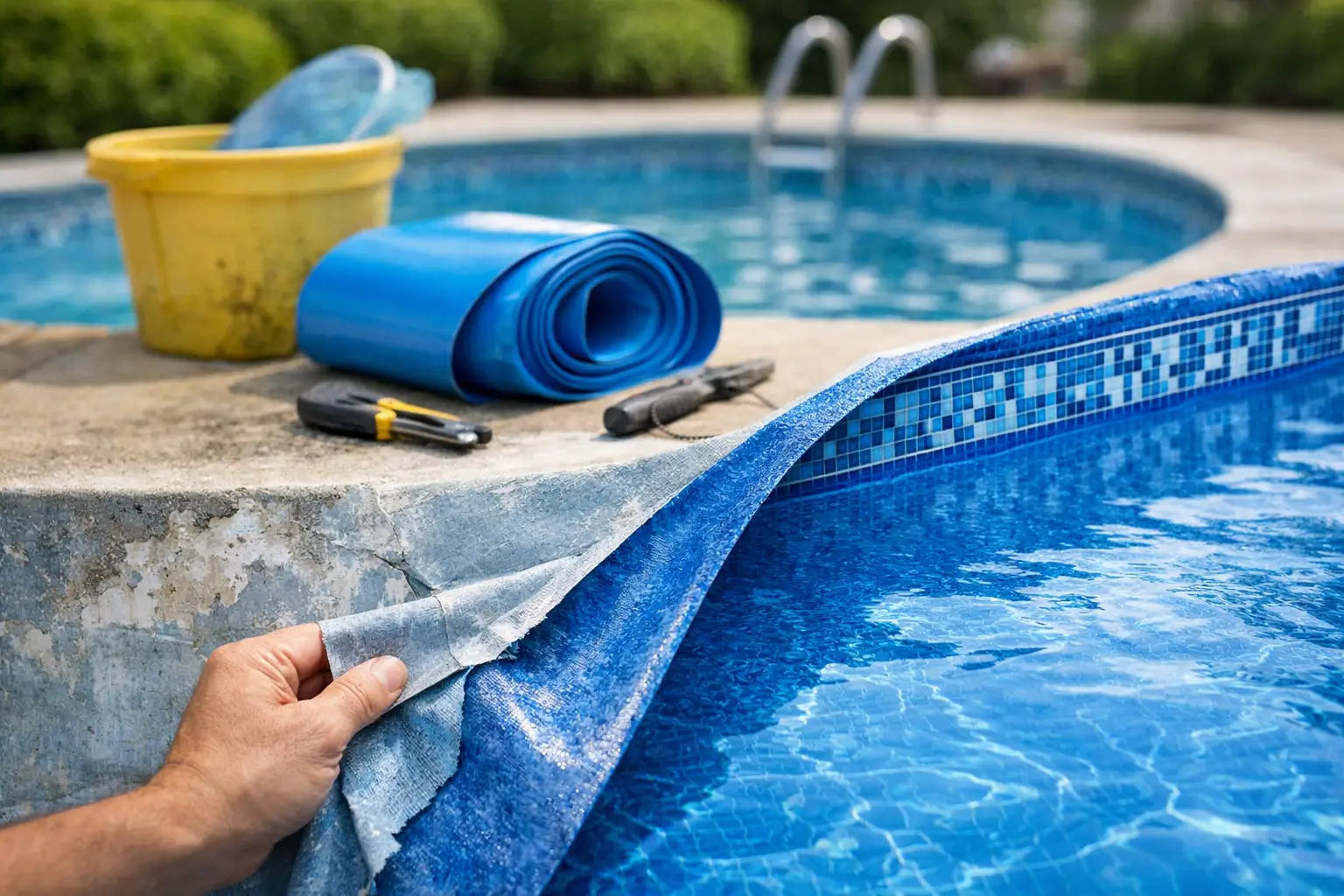
A pool liner rarely fails all at once. More often, it starts with small signs – a wrinkle that was not there last season, fading around the waterline, or a corner that no longer sits as neatly as it should. If you are asking when should pool liner be replaced, the answer usually comes down to age, visible wear, and whether repairs are still cost-effective.
For many pool owners in the Algarve, liner replacement is not just about appearance. It is about protecting the structure, keeping the pool comfortable to use, and avoiding a small issue turning into a more expensive renovation.
When should pool liner be replaced in a practical sense?
Most pool liners last somewhere between 8 and 15 years, depending on the liner quality, installation standard, sun exposure, water balance, and how the pool has been maintained over time. That is a wide range because no two pools age in exactly the same way.
A well-installed liner in a carefully maintained private pool may remain in good condition for well over a decade. On the other hand, a liner exposed to strong UV, fluctuating chemical levels, heavy use, or long periods without proper care may need replacing much sooner.
In practical terms, a liner should be replaced when it no longer seals properly, when the material has become brittle or overstretched, or when repairs are becoming frequent enough that they stop making financial sense. At that point, keeping the old liner often costs more in disruption and maintenance than planning a proper replacement.
The clearest signs your pool liner needs replacing
Fading and loss of finish
Some fading is normal over time, especially in sunny climates. However, when the pattern has significantly bleached out or the surface looks dull and worn, it can indicate that the liner material is ageing. This is not only a cosmetic issue. A liner that has lost its finish may also be less resilient.
If the pool still functions well, fading alone does not always mean immediate replacement. But if it appears alongside stiffness, cracking, or seam issues, it is usually a warning that the liner is reaching the end of its service life.
Cracks, tears, or splits
Small punctures can often be repaired. The problem is when damage becomes repeated or starts appearing in multiple places. Cracks near corners, steps, fittings, or along stressed areas usually suggest the liner is no longer flexible enough to cope with normal movement.
Once the material begins to split because it has become brittle, patching tends to be a short-term fix rather than a dependable solution.
Wrinkles that keep returning
Wrinkles can develop for several reasons, including water chemistry issues, movement behind the liner, or gradual stretching. One or two minor wrinkles may not justify full replacement, but widespread wrinkling often means the liner has shifted or lost its original fit.
Beyond appearance, wrinkles can trap dirt, make cleaning harder, and create uncomfortable areas underfoot. If the liner no longer sits properly against the pool shell, replacement is often the better long-term option.
Leaks and water loss
A dropping water level does not always point to the liner. Pipework, fittings, and equipment can also be responsible. But if inspections show the liner is leaking, especially around seams or ageing sections, the decision becomes more straightforward.
An isolated leak may be repairable. Several leaks, or one leak in a weakened liner, usually mean replacement should be considered before water loss starts affecting the surrounding structure or increasing operating costs.
Loose liner or bead problems
If the liner is pulling away from the track, slipping at the edges, or no longer fitting tightly around the pool perimeter, it can point to age, shrinkage, or installation wear. In some cases, the track system can be adjusted or repaired. In others, the liner itself has changed shape enough that replacement is the only reliable answer.
Stains that no longer come off
Not all staining means the liner has failed. Some marks come from metals, organic matter, or poor water balance and can be treated. But if the surface has become permanently discoloured, rough, or uneven, the liner may be too degraded to restore properly.
For properties where presentation matters – particularly holiday homes and tourist accommodation – this can be reason enough to replace the liner even before a total failure occurs.
Age matters, but condition matters more
It is tempting to decide based only on the number of years since installation. Age is useful, but it should not be the only factor. A 10-year-old liner can still be in sound condition, while a 7-year-old liner may already be struggling if it has had poor water balance or intense exposure.
This is why visual inspection and technical assessment are so important. The right question is not simply how old is the liner, but how well is it performing now, and how much useful life is realistically left.
Repair or replace?
This is where many owners hesitate, and understandably so. A repair usually costs less in the short term. If the liner is otherwise in good condition and the damage is limited, repair can be the sensible route.
Replacement becomes the better option when the liner has multiple issues at once. For example, if you have fading, recurring wrinkles, and a leak near an ageing seam, repairing only one problem does not solve the wider deterioration. The same applies if the liner is becoming brittle. New patches on old material rarely deliver lasting value.
There is also the question of timing. Replacing the liner on your schedule is usually less stressful than waiting for a failure during peak season or while guests are using the property.
Why the Algarve climate can shorten liner life
In the Algarve, pools are exposed to conditions that can be demanding on liner materials. Strong sunlight, high summer temperatures, and long operating seasons all contribute to wear. Water chemistry also tends to fluctuate more quickly in hot weather, especially if the pool is heavily used.
Holiday properties face an additional challenge. Pools in rental homes often see more intensive use and may not receive the same day-to-day observation as a permanent residence. Small liner issues can go unnoticed until they become larger and more costly.
That does not mean liners in the region fail early by default. It does mean professional installation, regular inspection, and balanced maintenance have an even greater impact on lifespan.
What happens during liner replacement?
Replacing a pool liner is also an opportunity to assess the pool more broadly. The old liner is removed, the pool surface underneath is checked, fittings and details are reviewed, and any underlying issues can be addressed before the new liner goes in.
This matters because a new liner should not simply cover existing problems. If there are surface irregularities, worn fittings, or signs of moisture where it should not be, dealing with them at the same time usually leads to a better and more durable result.
It is also the moment when some owners choose to update the pool’s look. A new liner can refresh the appearance of the entire outdoor area without the scale of a full structural rebuild.
When should you act?
If your liner is more than 8 to 10 years old and showing visible signs of wear, now is the right time to have it assessed. If there is active leaking, slipping, tearing, or widespread wrinkling, it is better not to wait.
The longer a failing liner remains in place, the greater the chance that the issue will affect surrounding components or lead to unnecessary water loss and downtime. For private homeowners, that means avoidable inconvenience. For managed properties and tourist lets, it can also mean lost bookings and reputational impact.
With more than 30 years of experience supporting pool owners across the region, POOLSHOP ALGARVE sees the same pattern repeatedly: early action gives clients more options, better planning, and a cleaner result.
A good liner should look right, fit properly, and give you confidence each time the pool is used. If yours is no longer doing that, it is probably time to stop stretching its lifespan and start planning the replacement properly.