

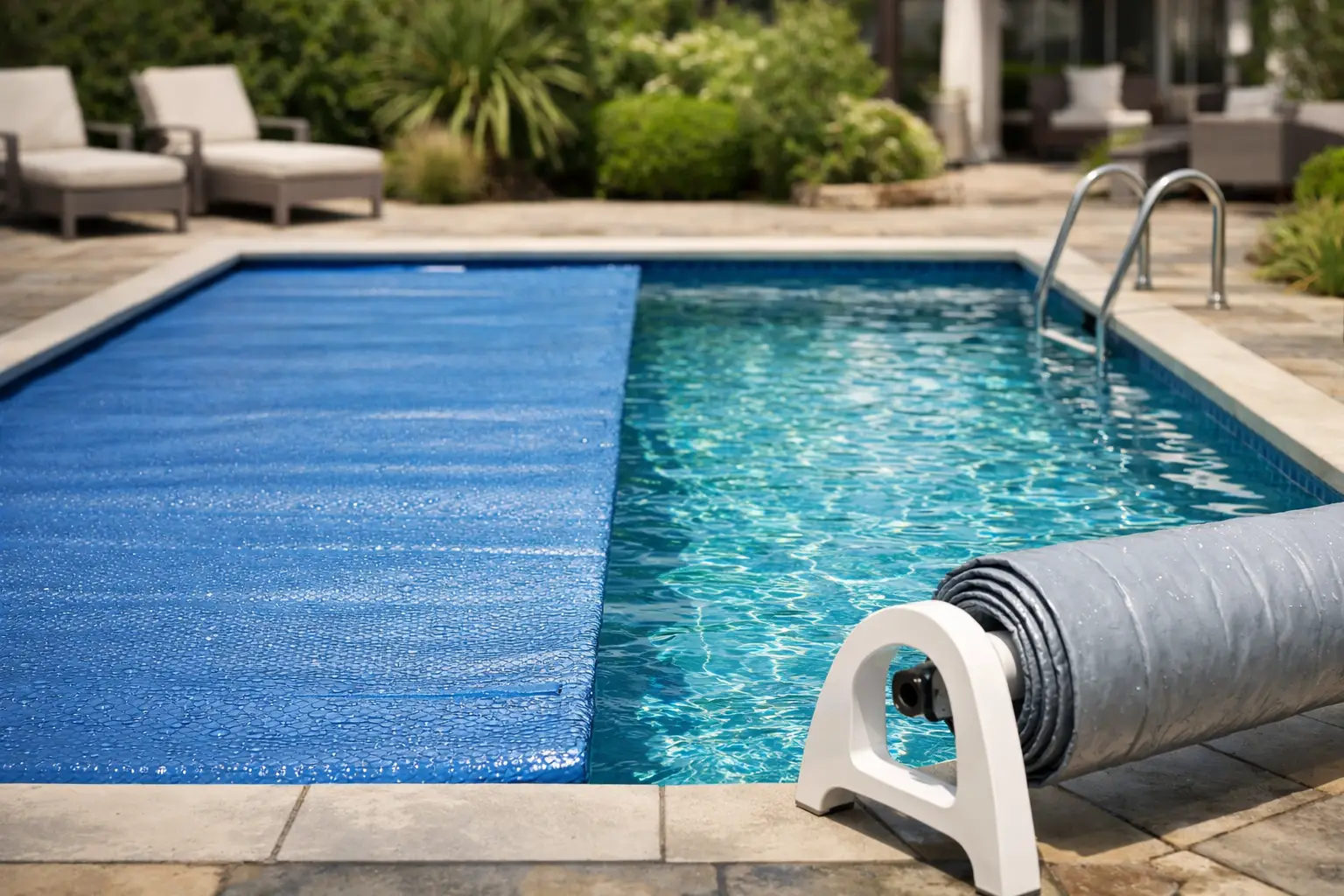
If you have ever looked at leaves in the water, watched the level drop after a hot week, or winced at the cost of heating, it is reasonable to ask: are pool covers worth it? In most cases, yes – but the right answer depends on how you use your pool, whether the property is occupied year-round or only seasonally, and what matters most to you: safety, cleanliness, energy savings, or convenience.
For homeowners and property managers in the Algarve, a pool cover is rarely just an accessory. It is a practical upgrade that can reduce ongoing costs, protect the pool between uses, and help keep the whole installation working more efficiently. The value is not only in what it adds, but also in what it helps you avoid.
Are pool covers worth it for Algarve properties?
The Algarve climate is one of the main reasons this question matters. Long sunny periods, warm temperatures and regular outdoor use make pools a major part of the property experience. At the same time, that same sun and heat increase evaporation, and open pools are constantly exposed to dust, insects and garden debris.
A cover helps limit these everyday issues. It reduces water loss, keeps more heat in the pool overnight and cuts down the amount of debris entering the water. That means the filtration system often has less work to do, chemical balance can be easier to maintain, and cleaning becomes less frequent.
For second homes and holiday accommodation, the benefit is often even greater. If a property stands empty for part of the year, a covered pool is generally easier to keep in stable condition than one left fully exposed. That can make a real difference in maintenance time and running costs.
The biggest benefits of a pool cover
The strongest argument for a pool cover is usually efficiency. Heated pools lose a surprising amount of warmth when left open, particularly overnight. A good cover slows this heat loss, which can lower energy consumption and make the pool more comfortable to use across a longer season.
Evaporation is another major factor. In a hot region, the amount of water lost from an uncovered pool can be significant. Replacing that water is not just about topping up the level. Fresh water affects chemical balance, and repeated refilling adds to overall running costs. A cover helps control that.
Cleanliness is where many owners notice the benefit immediately. Fewer leaves, less dust and fewer insects in the water means less manual cleaning and less strain on skimmers and filters. The pool still needs regular care, of course, but it is easier to stay on top of it.
There is also the issue of safety. Not every cover is designed for safety, so this depends on the model chosen, but some covers provide an important extra barrier for households with children, pets, or rental guests. In those cases, the value goes beyond convenience.
Where a pool cover can save money
Many buyers first focus on the upfront cost, which is understandable. A quality cover is an investment. The better question is where the return comes from over time.
Heating costs are often the clearest example. If you use a heat pump, solar heating or another heating system, a cover helps retain the warmth you have already paid for. Without one, a large part of that heat escapes unnecessarily, especially during cooler nights or shoulder seasons.
Water savings also matter more than some people expect. Less evaporation means fewer top-ups. Over time, that can reduce both water usage and the amount of chemicals needed to correct the balance after fresh water is added.
Maintenance savings are sometimes less visible, but still important. Cleaner water can mean shorter filtration cycles, less wear on equipment and reduced cleaning time. For owners of rental or managed properties, that can translate into smoother operations and fewer reactive call-outs.
Are pool covers worth it if you do not heat the pool?
Yes, often they are. While the energy-saving argument is strongest with heated pools, unheated pools can still benefit from reduced evaporation, improved cleanliness and better water condition.
For some owners, that alone makes the cover worthwhile. If your main frustration is finding the pool full of debris after a windy day, or seeing the water level drop during hot weather, the practical value is immediate. Even without heating, keeping the pool cleaner and more stable can make ownership simpler.
That said, the financial payback may be slower if heat retention is not part of the equation. In those cases, the decision often comes down to how much you value convenience, appearance and routine maintenance reduction.
The trade-offs to consider
Pool covers are not a perfect solution in every situation. The first trade-off is cost. Basic covers are more affordable but may offer fewer benefits in durability, appearance or ease of use. More advanced options can perform much better, but require a larger initial investment.
Convenience is another point. A cover only works well if people actually use it. If it is awkward to remove and replace, some owners stop using it consistently. This is why choosing the right system matters as much as choosing to have one in the first place.
There is also the question of aesthetics. Some covers are discreet and integrate well with the pool area, while others can feel more functional than elegant. For high-end homes or guest-facing properties, appearance should not be treated as an afterthought.
Finally, not all covers are safety covers, and not all are designed for year-round protection. Buyers sometimes assume one cover will solve every issue. In reality, different models are designed for different priorities.
Choosing the right type of cover
The best choice depends on the pool, the property and how the space is used. A simple summer cover may be enough for owners mainly interested in heat retention and evaporation control during the swimming season. It is often the most economical route and can work very well when used consistently.
A slatted automatic cover offers more convenience and a cleaner finish. These systems are popular for clients who want ease of operation and a more premium look, especially in modern residential settings. They are also well suited to regular use, since opening and closing the pool is faster.
For households where safety is a key concern, it is essential to choose a cover specifically designed for that purpose. This should always be discussed properly before installation, as safety performance depends on the product and the setting.
Winter or protective covers can be useful where the goal is to shield the pool during longer periods of non-use. For second homes, this can be especially valuable during quieter months.
The important point is that the right cover is not selected in isolation. It should match the pool structure, equipment, user habits and expectations for maintenance.
When a pool cover makes the most sense
If you heat your pool, a cover is usually a very sensible investment. If the property is left vacant for periods of time, it also makes strong practical sense. The same applies if you manage a rental property and want to improve presentation while reducing maintenance pressures.
It is also worth serious consideration if water consumption is becoming a concern, or if you simply want the pool to stay cleaner between visits. In many Algarve homes, these are not minor advantages. They directly affect the day-to-day cost and effort of pool ownership.
Where it may be less essential is in pools used very casually, with no heating, minimal concern about debris and no real issue around safety or evaporation. Even then, there can still be benefits, but the urgency is lower.
So, are pool covers worth it?
For most pool owners, yes – especially when the cover is chosen properly and installed with the wider pool system in mind. The gains are practical: lower heat loss, less evaporation, cleaner water, easier maintenance and in some cases improved safety. The exact return depends on the property, but the value is often felt across several areas at once rather than just one.
After more than 30 years working with pools across the Algarve, POOLSHOP ALGARVE sees this decision as part of a bigger picture. The right cover should support the way you use the pool, protect your investment and make ownership easier, not more complicated.
If you are weighing up whether a pool cover is the right move, the best starting point is not the cheapest option or the most advanced one. It is a clear view of what your pool needs to do for you, season after season.